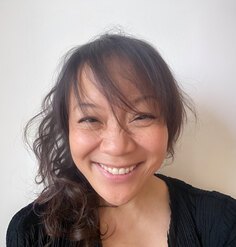
Perspectives: Anita Bueno
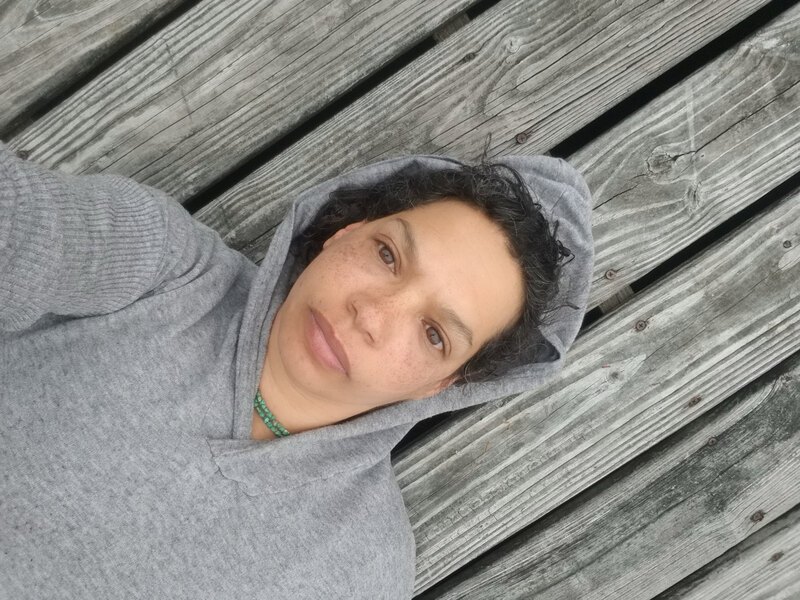
Anita Bueno is a licensed landscape architect and a certified Feldenkrais practitioner®.
Anita has integrated the two professions, exploring the relationship between thought, movement, and the internal and external environments. For 10 years, she designed recreation areas for the US Forest Service, and for another decade she founded and directed BuenoLuna Landscape Design, a residential design/build firm primarily focused on mitigating climate change through ecologically designed landscapes. Chronic illness shifted her path, leading to her practice of mindful self-awareness and to teach the Feldenkrais Method of Somatic Education. Anita now uses embodied learning to inform her creative work, her relationship with herself and others, and generally, her overall approach to life.
MARCH 2026
What drew you to landscape architecture?
My path, like most organic things, was not linear. I did many things before I became a landscape architect. I grew up in NYC within an extended Dominican immigrant family and thanks to affirmative action, I escaped my redlined neighborhood for college in rural upstate NY, where I earned a degree in philosophy, religion and Asian studies. I followed my curiosity, which manifested, at various times, as a gardener, a bike mechanic, a welder, a sculptor, a wilderness backpacker, a commercial fisherman and a world traveler. My desire for landscape stewardship, for perceived influence, and to be outdoors drew me to seek an MLA in landscape architecture.
What is driving you professionally right now?
I am drawn to process; becoming has always been more interesting than what things become. This is fitting because landscape IS the unfolding of process! My current challenge is analyzing how landscape architects work. How do we design, relate to our clients, our sites, our collaborators and contractors? If we truly embodied being interconnected with all beings, would that change how we work?
What challenge(s) is landscape architecture allowing you to address right now?
The challenge of catalyzing culture change from separation to interconnectedness.
Over the past few years, I started to question my relationship to land and landscape architecture itself. Here is a profession I love, yet I'm realizing it might be fundamentally flawed. How we practice creates an ever widening disconnect between humans and nature, between practitioner and site. We are seduced by speed and convenience (which is true of modern culture in general). Many of us are drawn into the profession by a deep connection to the natural world and then as professionals we spend all our time indoors on screens. We forget that even the best models and maps are only representative simplifications of our infinitely complex reality. To truly connect we need embodied experience. We believe, and with the best intentions, that we can “fix” issues and design “solutions., yet even the language we casually use separates us from land. For example, “ecosystem management,” or “natural resources” assumes an anthropocentric arrogance of power and control, manipulating and commodifying land. We tend to embrace academic elitism so that we sound professional and intelligent, but that language excludes other types of intelligence and the many ways of knowing reality. I wonder, what new, or old sustainable environments could we enable where we let go of ego and the quest for accolade, and instead live in spirit, cultivating humility and deep listening skills to assist and support landscape?
In this light, I am using my networks and experiences from 20+ years of practice to spread tiny seeds of culture change, with the hope that something will land and germinate.
What challenge would you give emerging leaders?
Leadership is tricky. To be a good leader you need to be a good follower, you need to listen to your inner authority and to the human and non-human people around you. You need to be authentic, or few will willingly follow you. You need to be vulnerable and be ok with failure (yours and other’s) because that is how you learn. I challenge everyone to be themselves without fear, recognition, or judgement. Be kind. Be comfortable with uncertainty. Be generous and trust in the goodness of others.
Where do you think the profession needs to go from here?
The profession has changed a lot since I started practicing, but one thing that has not been addressed much is the need for new business models that move away from billable hours. Despite all the talk about self-care, in many settings, resting is still a subversive act. Do you want a fast response or a good response? Fast is sometimes necessary, but it's never better and rarely good. Getting to good answers starts by asking good questions. What if we created a professional environment that welcomed slowing down to allow for something new to emerge? What if we got our hands dirty and were a little messier and more connected to the land and the human and non-human people who build and maintain and use the spaces we create? What if we were to acknowledge the ways in which we are complicit in the culture of separation and othering, and then explore new, more creative and integrative ways of being?
LAF's Perspectives interview series showcases landscape architects from diverse backgrounds and identities discussing how they came to the profession and where they see it heading. Any opinions expressed in this interview belong solely to the author. Their inclusion in this article does not reflect endorsement by LAF.
To stay up-to-date on future Perspectives articles as well as LAF programs, events, and funding opportunities, subscribe to LAF emails.