Six Selected for 2026-27 LAF Fellowship for Innovation and Leadership
One senior-level professional, two mid-career, and three recent LAF Olmsted Scholars will form the ninth cohort of LAF Fellows.
The Landscape Architecture Foundation (LAF) is delighted to introduce the 2026-2027 cohort of the LAF Fellowship for Innovation and Leadership. This catalytic program, now entering its ninth cycle, was launched in 2016 to cultivate transformational leadership among landscape architecture professionals and support ideas that have the potential to create impactful change toward a healthier, more equitable, and sustainable world.
The mid-career and senior-level LAF Fellows will each receive a $25,000 award and dedicate 12 weeks of time over the course of the coming year to pursuing their proposed project. The recent LAF Olmsted Scholars receive a $5,000 award to further their ideas in preparation for future fellowship, partnership, or funding opportunities. The fellowship consists of this project work, supported by facilitated discussions, critiques, intergenerational mentorship, and explorations of transformational leadership that occur during three 3-day residencies.
The 2026-2027 fellowship year will commence in May and conclude in May/June 2027 with a final symposium to showcase their work. LAF is proud to make this investment in people and ideas that will drive the future of landscape architecture, and we look forward to working with the cohort as they tackle important challenges.
Meet the 2026-2027 LAF Fellows
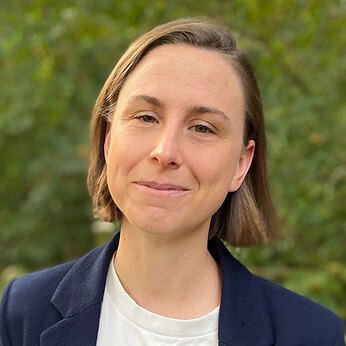
Marybeth Campeau
(2023 LAF Olmsted Scholar)
Associate Research Scholar, Coastal Dynamics Design Lab, North Carolina State University
Raleigh, North Carolina
Climate-Responsive Conservation: Should We Help Plants and Animals Outrun Extinction?
As temperatures rise, many species are shifting their habitat ranges and moving across landscapes. This project examines climate-responsive conservation — an emerging approach that rethinks land management, design, and policy to account for climate-driven movement as species track their ecological niches. Through narrative inquiry, interviews, and data visualization, this work engages landscape architects, scientists, and land managers experimenting with ways to design for movement, permeability, and ecological change. Their efforts, from wildlife corridors and crossings to adaptive forest management and new planning tools, signal a departure from static conservation models. Marybeth proposes to develop these ideas into accessible stories for broad audiences, contributing to wider conversations about biodiversity, ecological flow, and landscape architecture’s evolving role in a changing climate.

Liska Chan
Associate Professor of Landscape Architecture, University of Oregon
Eugene, Oregon
The Politics of Surface: Feminist Approaches to Fashion, Landscape, and Spatial Practice
This project explores how fashion films, campaigns, and runway shows use landscapes — such as ruins, deserts, and historic sites — to shape how we imagine climate change, nature, and the body. These visually striking settings often make the environmental crisis feel dramatic or beautiful while obscuring questions of labor, ecology, and power. Drawing on feminist and environmental theory, the project looks closely at how bodies and environments are staged in fashion media and asks whose stories and relationships to land are made visible, or erased. Through drawing, mapping, and speculative design, the project will create alternative images that reimagine how fashion might engage landscapes more ethically and relationally. The work culminates in the Landscape Lookbook, a visual publication that invites designers, students, and the public to rethink how images shape our understanding of environment and place.
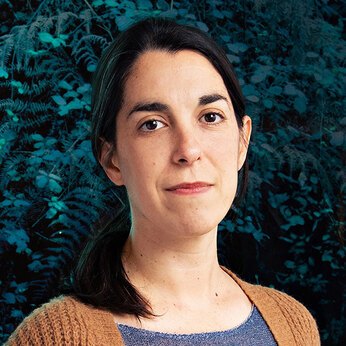
Ilana Cohen
Landscape Architect, Atelier Roberta
Paris, France
A Roadmap to Reuse: Case Studies in Circular Landscape Policy and Logistics
According to the 2023 Circularity Gap Reporting Initiative, adopting circular economy principles could reverse the global carbon overshoot and reduce the need for further resource extraction by one third. Yet a major challenge in the site construction sector is the lack of needed infrastructure to facilitate material flows. This project uses a case study approach to assess the policy and logistics needed for the widespread implementation of a circular construction material economy in landscape architecture. It will probe how such an ecosystem is developing in Europe and specifically France where the circular economy is becoming increasingly robust, and landscape architects’ approach to materials is evolving in lockstep. The objective is to outline best practices and glean lessons on how to implement such strategies in the North American context.

Robert Colón
(2020 LAF Olmsted Scholar)
Resiliency Coordinator, Miami-Dade County Department of Environmental Resources Management
Miami Beach, Florida
Designing Leadership: Actualizing Nature-Based Resilience in the Land Between Two Waters
The transformation of South Florida’s landscape began in the early 20th century when the federal government drained the Everglades through the Central and Southern Florida Project. Engineered for stormwater control, this system is increasingly strained by sea level rise. Without major changes, it may no longer function by 2060. Adaptation efforts today are largely reactive, responding to immediate needs rather than long-term challenges. Compounding this issue, the federal government is now weakening the agencies responsible for maintaining and adapting the system it created. This uncertainty creates a rare chance to fundamentally reimagine the relationship with water in this urbanized area. This project explores how the field of landscape architecture can help lead this shift and empower South Florida residents to reclaim their role in determining the future of their landscape as climate change accelerates.

Catherine De Almeida, PLA
Associate Professor of Landscape Architecture, University of Washington
Seattle, Washington
Design with Waste: Toward Regenerative Futures
Waste is not inevitable — it is designed. Reframed as an abundant resource, it can catalyze repair, cooperation, collaboration, and regenerative futures. This project explores how landscape architects can lead a shift toward circular, regenerative practices, reducing the need for new extraction and minimizing disposal impacts on frontline communities. Through case studies and interviews with practitioners and community-based organizations, the project will document strategies for localized material reuse, deconstruction, and reconstruction that transform discarded materials into assets for design, construction, and community resilience. Presented as a resource guide, the work will culminate in a curated menu of materials, assemblies, and techniques that make these strategies visible, actionable, and replicable. Design with Waste will highlight how design decisions can contribute to more equitable and sustainable material systems and will position landscape architecture as a leader in shaping regenerative futures.

Davey Friday
(2022 LAF Olmsted Scholar)
Urban Planner II, City of Dallas Planning and Development Department
Dallas, Texas
Corridors of Legacy
Across American cities, streets named after Dr. Martin Luther King Jr. commemorate ideals of justice, equality, and civic memory. Yet many of these corridors run through disinvested neighborhoods, are poorly maintained, and remain disconnected from the communities they were meant to honor. This contradiction between symbolic importance and material neglect raises critical questions about the role of design in shaping civic space. This project asks: What spatial forms, programs, and landscape strategies could transform these streets into platforms for participation, collective identity, and democratic life? Through a comparative study of MLK Boulevards in Dallas and Chicago that analyzes current conditions and proposes new typologies and design strategies, this project aims to show how architecture and landscape architecture can reshape symbolic streets into active civic spaces that support memory, equity, and engagement.
Thank You to Our Jurors
- Michael Grove, FASLA, Principal, Sasaki
- Alexis Landes, Managing Principal and Partner, SCAPE
- Marc Miller, Associate Professor of Landscape Architecture, Stuckeman School Associate Director for Access, Wellbeing, and Equity, The Pennsylvania State University
- Lucinda Sanders, FASLA, Design Partner, President, and CEO, OLIN
- Trinity Simons Wagner, Executive Director, Mayors’ Institute on City Design
- Daniel Winterbottom, FASLA, Professor of Landscape Architecture, University of Washington